

 +86-371-63699132
 sales@unique-crusher.com
 Skype: hi-unique


 العربية
 Español
 Português
 Deutsch
Tel: +86-371-63699132
Fax: +86-371-63935058
E-mail:
sales@unique-crusher.com
Zip Code: 450008
Why Construction Waste Mobile Crushing Plants Are More Expensive Than Regular Ones
In recent years, mobile crushing plants have become an increasingly popular choice for on-site material processing. Among them, the construction waste mobile crushing plant—especially the wheel-type model—has received particular attention from urban recycling projects and contractors. However, many customers often ask: “Why is a construction waste crushing station more expensive than a regular stone crushing station of the same capacity?”
The answer lies in design differences, material requirements, and operating conditions. Let’s take a closer look.
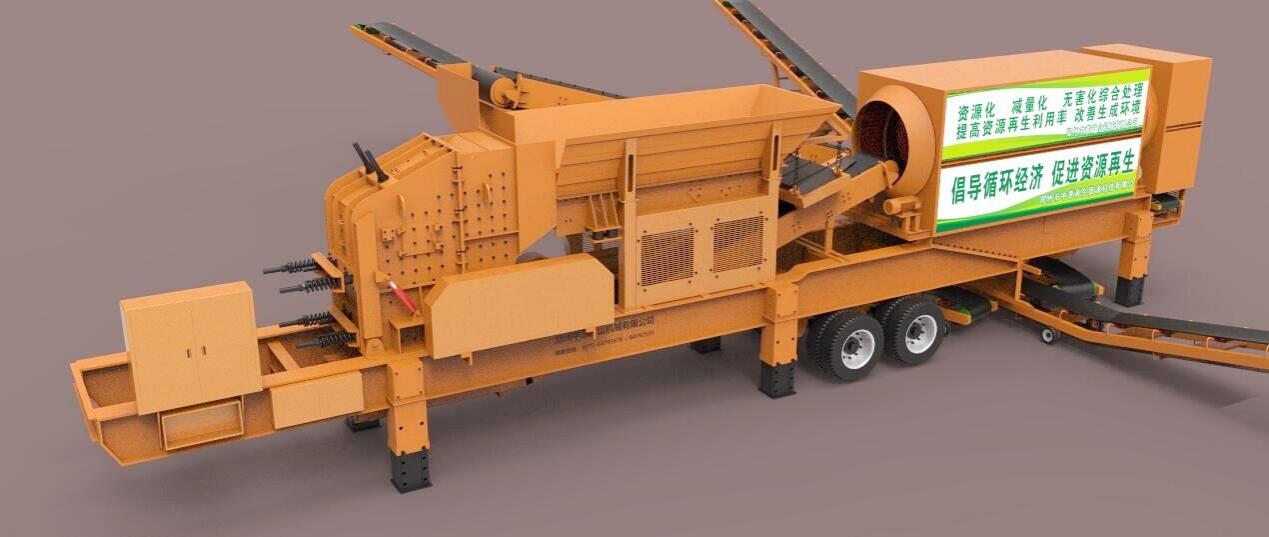
1. Stronger Design for Complex Working Conditions
Construction waste is not like natural stone. It contains concrete blocks, steel bars, bricks, asphalt, and even wood. To handle these mixed materials, the construction waste crushing station must be designed with reinforced structures and anti-clogging systems.
For example, the chassis and frame of a construction waste crusher are usually heavier and thicker than a regular plant’s to ensure durability on demolition sites. The feed opening and conveyors must also be wider and stronger to prevent jamming. All of these upgrades increase material and manufacturing costs.
2. More Advanced Configuration
A typical stone crushing plant mainly deals with uniform raw materials like limestone or granite. In contrast, a construction waste mobile plant needs multiple stages of separation and screening.
It often includes:
l A magnetic separator to remove steel bars
l A vibrating feeder and pre-screen to handle mixed materials
l A dust suppression system to control airborne particles
l A hydraulic system for quick maintenance and mobility
These additional systems are essential for efficiency and safety—but they also make the equipment more expensive.
3. Focus on Environmental Protection
Construction waste recycling is closely tied to environmental regulations. Therefore, construction waste crushing plants are often equipped with sealed structures, spray dust suppression, and noise reduction systems.
Such features meet environmental standards but significantly raise manufacturing costs.
4. Mobility and Flexibility Requirements
The wheel-type construction waste plant is designed to move frequently between urban demolition sites. That means it must have:
l A complete electrical and control system integrated into the chassis
l Hydraulic lifting legs and quick couplers for setup and transport
l Compact design for easy road movement
All these details enhance convenience and mobility but require complex design and higher precision manufacturing.
5. Higher After-Sales and Maintenance Standards
Construction waste recycling projects usually run in harsh environments. Manufacturers must provide reinforced spare parts, customized liners, and on-site service support.
This higher level of technical service also contributes to the overall cost.
Conclusion
Although the price of a construction waste mobile crushing plant is higher, it delivers much greater value—offering stronger structure, higher reliability, environmental compliance, and operational flexibility.
For customers engaged in urban construction or demolition projects, investing in a professional construction waste crushing station is not just about equipment—it’s about safety, efficiency, and long-term profit.

Jaw Crusher | Stone Crusher | Mobile Crusher | Crushing Plant| Site Index| Product Index
Copyright © 2013 Zhengzhou Unique Industrial Equipment Co., Ltd. All Rights Reserved. Technical Support:西维科技


